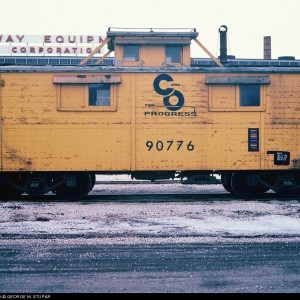
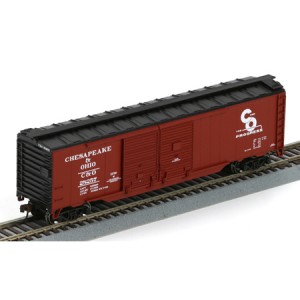
The C&O
railroad wanted to build a spur from Ronceverte to Durbin, because
of the increasing demand for lumber, and to connect to the Coal &
Iron Railroad proposed at Durbin. On Dec. 22, 1900, it reached Mile
Post 80.6, the small community on Leatherbark Creek, around the
present site of Cass. The little community was flurrying with action
when the WVP&PCo. announced it would expand its operations there.
The West
Virginia Pulp and Paper Company (Now Westvaco) was formed in 1899
when the companies (The West Virginia Spruce Company) of the Luke
brothers, who were successful with “sulphite” papermaking, needed
money for expansion and thus merged with the Morrison and Cass
Paper Company, which was owned by Joseph Cass. (There’s a little
more to the original companies but it makes it confusing)
Shortly
before 1900, WVP&PCo. directed Samuel Slaymaker (a land consumer) to
begin developments, and Emory P. Shaffer, an experienced lumberman,
to supervise the operation. Emory Shaffer would keep Cass running
strong for 39 years, and he is renowned to be the reason Cass was so
successful. The West Virginia Pulp and Paper Co., had secured nearly
200,000 acres of Cheat Mountain at the headwaters of the Shavers
Fork, and had bought about 68,000 acres for a mill and town. They
were now ready to start a mill and railroad up Leatherbark Creek. So
in early 1900 a camp was built to get things going, with the first
meal served on July 4, 1900. The first priority was to build the
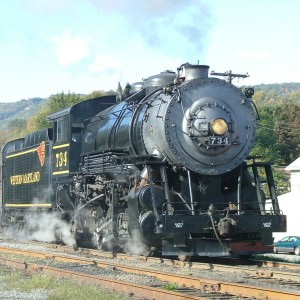
railroad. John Luke and J. Cass decided that it would take some Shay
Locomotives, and two switch backs to make it to the top of Cheat
Mountain, to harvest the Red Spruce lumber. *The Shay was invented
by Ephraim Shay
in the
late 1800's.
When the
line to the top was completed, and the C&O railroad finished it's
line to Cass in Dec. 1901 - A Shay came seven days later, and two
days after that the first shipment of pulpwood was taken to
Covington. The
logging railroad at Cass operated under a subsidiary of the West
Virginia Pulp & Paper Co. originally to be called Greenbrier & Cheat
River Railroad but it fell through, so it was called Greenbrier and
Elk River Railroad. After 1905 the railroad went through a
succession of name changes. The Greenbrier & Elk River became the
Greenbrier, Elk & Valley Railroad in 1909, only to become the
Greenbrier, Cheat & Elk Railroad (GC&E) in 1910.
The town
was well along when on May 24, 1900 the Covington Centennial
reported it would be named Cass in honor of J. K. Cass, VP of WVP&P.
The lumber
operation wouldn't have happened if S. Slaymaker hadn't proposed
getting involved with it. Originally the only concern was the vast
“Red Spruce Forest” for pulp because it made some of the best paper,
but with his persuasive selling tactics sold the WVP&PCo. the idea
of logging. A sawmill was rapidly built, but the actual mill
operations started out slow. However by Spring 1902, it was running
two eleven hour shifts, six days a week shipping 1000 car loads a
month, and for the next twenty years the mill at Cass would be know
as the worlds largest double-band sawmill. On the mountain there
were 1000 men working at any given time, and around 1700 people
lived in Cass. The workers lived in log camps; each could house 100
men or more. In the town the company built 100 houses and rented
them for $12 a month. The company also built white picket fences and
wooden sidewalks to give the town some charm.
To no
surprise, the town could get rowdy when the loggers came off the
mountain to spend what money they made. It wasn’t unusual for a
logger to spend months at a time working in the log camps – when
they decided for a break, some sent the money home, but most just
blew it all right there in Cass or should I say East Cass, a.k.a.
Brooklyn. This part of town was out of the company limits and abided
speakeasies, boarding houses, and gambling. It was told that the
murders in Cass in the 20s were about an average of one a month.
Like a sad
movie, Cass played out in the 30s. E. Shaffer’s saga was ended, and
in 1942 the mill was sold to the Mower Lumber Co, owned by Edwin
Mower of Charleston. By this time the logging operation was on it’s
third cut, and there were only about 85 loggers left on the
mountain. The final blow came when Ed Mower died - mill operations
gradually declined until it closed July 1, 1960. In some 58 years
the logging operation of Cass had cut about 1.2 Billion board feet
of lumber. Sometime in late 1960 the railroad was sold for scrap and
the cutting and wrecking began. By luck, on June 15, 1962 the State
of West Virginia bought the 11 miles from Cass to the top at Bald
Knob. This consisted of all of the shays (that were left), log cars,
and engine shop. In 1976 the town was also purchased. Now, you can
stay in some of the old house and ride the train just call or look
at there web site. 1-800-Call-W.Va.